Wellbeing for beginners (and beyond)
09/07/2024
How do you manage your finances?
10/07/2024Wellbeing for beginners (and beyond)
09/07/2024How do you manage your finances?
10/07/2024Wellbeing for beginners (and beyond)
09/07/2024How do you manage your finances?
10/07/2024The support of a psychologist or therapist is worth considering in situations where daily challenges begin to exceed our ability to cope. If you are experiencing chronic stress, anxiety, depression, or have difficulties with interpersonal relationships, the help of a specialist can be invaluable. Therapy is also advisable if you are experiencing traumatic events, such as the loss of a loved one, divorce or serious illness. In addition, getting help from a psychologist can be helpful in working on personal development, improving self-esteem and learning effective coping strategies. Therapeutic support helps you understand your emotions, thoughts and behaviors, which leads to better functioning and a greater sense of control over your life.
Psychotherapy encompasses a variety of streams, each of which offers a unique approach to treating mental and emotional problems.
Cognitive-behavioral therapy (CBT) focuses on identifying and changing negative thought patterns and behaviors that affect mood and functioning. Psychodynamic therapy, derived from psychoanalysis, focuses on examining unconscious processes and past experiences that influence current behavior and relationships. Humanistic therapy, including approaches such as Gestalt therapy and client-centered therapy, emphasizes self-actualization, personal growth and empathetic understanding of the patient.
Systemic therapy, on the other hand, analyzes the individual in the context of his family and social relationships, paying attention to communication patterns and group dynamics. Each of these strands offers a variety of tools and techniques that can be tailored to a patient's individual needs, helping them achieve better mental and emotional health.
Distinguishing between depression and temporary mood deterioration is crucial for appropriate support and treatment. Worse moods, such as sadness or depression, can be a natural reaction to difficult life events and usually subside after a short time. Depression, on the other hand, is a serious mental disorder characterized by prolonged feelings of sadness, hopelessness and loss of interest in daily activities that lasts at least two weeks. Symptoms of depression can also include changes in appetite, sleep disturbances, chronic fatigue, difficulty concentrating and suicidal thoughts. If these symptoms are intense and persist over a long period of time, it is important to consult a psychologist or psychiatrist who can provide appropriate diagnosis and assistance.
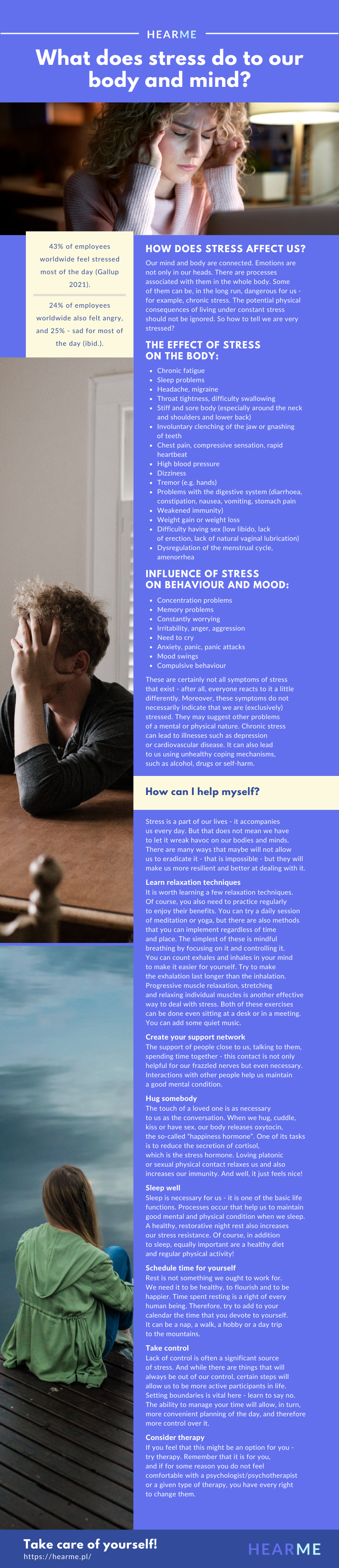
Stress is the body's natural response to challenges and threats, mobilizing us for action. In short-term situations, stress can be beneficial, improving concentration and performance. However, chronic stress, sustained over a long period of time, can negatively affect physical and mental health. It can lead to problems such as high blood pressure, a weakened immune system, anxiety, depression and sleep disorders. It is important to develop effective stress management strategies, such as regular physical activity, relaxation techniques (such as meditation and deep breathing), a healthy diet and adequate sleep. If you are having difficulty managing stress, the support of a psychologist or therapist may be helpful.